


The Journey of EMDR: A Comprehensive Guide
- Matthew Vincent

- Aug 3
- 5 min read
Bridging the Gap to Emotional Recovery
In the landscape of modern mental health, few treatments have offered as much hope and tangible relief as EMDR (Eye Movement Desensitization and Reprocessing) therapy. It is a structured, evidence-based approach that fundamentally changes how our brains handle the weight of past experiences. Many of us carry burdens that feel immovable—memories that trigger intense physical and emotional reactions as if they were happening right now. These 'stuck' memories are the targets of EMDR, and the goal is simple but profound: to process them until they become neutral parts of our personal history rather than active sources of pain. For more on the initial steps of processing, see our guide on how to rebuild your life after trauma.how to rebuild your life after trauma.
EMDR therapy is built on the Adaptive Information Processing (AIP) model. This model suggests that our brains are naturally wired for healing. Just as your body works to close a physical cut, your mind works to integrate experiences and find a state of mental health. However, when an event is too distressing—be it a single incident or repeated stressors—the natural processing system can be overwhelmed. The experience is stored in its 'raw' form, complete with the same sights, sounds, and emotions of the original event. EMDR provides the necessary kickstart to that natural system, allowing the brain to finally digest and let go of thoughts that have been stuck for too long.let go of thoughts that have been stuck for too long.
EMDR therapy is not about forgetting the past; it is about removing the sting from it, so you can remember without the pain.
The Analogy of the Physical Wound
To better understand this, consider a physical wound. If you cut your arm, your body immediately begins a complex biological process to heal. However, if a foreign object—a piece of debris or 'dirt'—gets lodged in that wound, the healing process is blocked. The wound may become inflamed, painful, and never fully close. In this metaphor, the 'dirt' represents the traumatic memory. No matter how much time passes, the wound remains open because the trauma hasn't been cleared out. EMDR therapy acts as the clinical tool that helps us identify and 'clean out' that emotional debris. Once the blockage is removed, your brain’s natural healing mechanisms take over, allowing the emotional wound to finally close and heal.
A Deep Dive into the 8 Phases
Phase 1: History Taking and Treatment Planning
Every healing journey begins with understanding where you’ve been. In Phase 1, we spend time discussing your history and identifying the specific distressing memories that are contributing to your current symptoms. This isn't just about listing bad things that happened; it's about seeing the connection between past events, current trauma triggers, and the future you want to create. We develop a comprehensive treatment plan that targets these events in a logical and safe order, ensuring the pacing of therapy is entirely tailored to your needs and readiness.trauma triggers, and the future you want to create. We develop a comprehensive treatment plan that targets these events in a logical and safe order, ensuring the pacing of therapy is entirely tailored to your needs and readiness.
Phase 2: Preparation
Safety is our absolute priority. Before we dive into the deep work of reprocessing, we ensure you have the tools to handle the emotional waves that may arise. In Phase 2, I will explain exactly how EMDR works and answer any questions you have. We will practice several grounding and relaxation techniques, such as the 'Safe Place' or 'Container' exercises. These tools act as your emotional safety net, empowering you to maintain stability both during our sessions and in your daily life as we move forward.
Phase 3: Assessment
Now, we begin to zoom in on a specific target memory. We identify four key components: the visual image that represents the worst part of the trauma, the negative belief you have about yourself when you think of it (e.g., 'I am not safe' or 'I am at fault'), the emotions you feel (e.g., fear, shame, or sadness), and the physical sensations in your body (e.g., a tight chest or a heavy stomach). We also identify a positive belief you would like to have (e.g., 'I am safe now' or 'I did the best I could') and use clinical scales to measure your current level of distress.
Phase 4: Desensitization
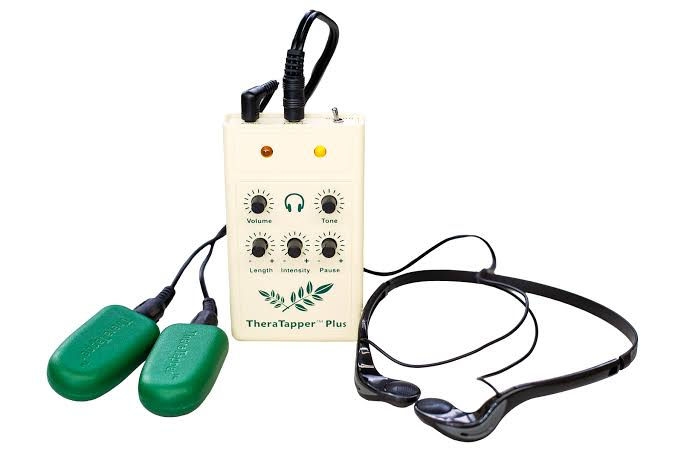
This is the core of EMDR. While focusing on the target memory, we use bilateral stimulation—typically side-to-side eye movements, but sometimes gentle taps or sounds. This process mimics the rapid eye movement (REM) we experience during sleep, which is when our brains naturally process information. During this phase, you simply notice whatever comes up—new thoughts, images, feelings, or physical sensations. Your brain begins to re-route the information, reducing the emotional charge of the memory until it no longer feels overwhelming.
Phase 5: Installation
Once the target memory is no longer distressing, we focus on the positive. In Phase 5, we work to 'install' and strengthen that positive belief we identified in Phase 3. We use more sets of bilateral stimulation to weave this new, empowering perspective into your self-identity. The goal is for you to not just say 'I am safe now,' but to feel that truth deeply and completely when you think about the past experience. This strengthens your resilience and builds a healthier foundation for your future.
Phase 6: Body Scan
Trauma often leaves a physical footprint. Even when the thoughts are calm, the body might still be holding onto tension. In the Body Scan phase, we ask you to hold both the original target and the positive belief in mind while scanning your body from head to toe. If we find any lingering physical distress—perhaps a knot in your stomach or tension in your shoulders—we continue the reprocessing until your entire system feels clear and at peace. This ensures a holistic and complete resolution of the trauma.
Phase 7: Closure
Every single EMDR session ends with closure. This ensures that you leave the session feeling better—or at least as stable—as when you arrived. If the reprocessing of a particular memory isn't finished within one session, I will guide you through grounding and calming techniques to help you return to the present moment. We will discuss what to expect between sessions and remind you of the self-control tools you learned in Phase 2, ensuring you feel safe and supported until we meet again.
Phase 8: Reevaluation
At the start of every new session, we reevaluation our previous work. This is a critical step in maintaining the long-term success of the therapy. We check in on the memories we processed to ensure that the distress remains low and that the positive belief is still firmly in place. We also identify any new developments or insights that have emerged since our last meeting. This ongoing cycle of reevaluation ensures that your healing journey remains on track and continues to evolve as you do.
Clinical Recognition & Global Support
EMDR therapy is not just a theoretical approach; it is one of the most rigorously researched psychotherapies in history. Its effectiveness is recognized by leading health and mental health organizations across the globe. For those seeking a treatment path that is scientifically validated and proven to provide lasting relief from PTSD, trauma, and emotional distress, EMDR is a gold-standard choice.
Your Journey to Healing Starts Here
At Redlands Counselling Service, I am dedicated to helping you find your way back to emotional health. You do not have to carry the weight of your past alone. Whether you are dealing with trauma, anxiety, or depression, EMDR therapy offers a proven and compassionate path forward. My practice in Capalaba is a safe, confidential, and judgment-free space where we can work together to resolve what keeps you stuck and build a more resilient future. Reach out today, and let's take that first step toward your well-being.


Comments